Why a career in tech?
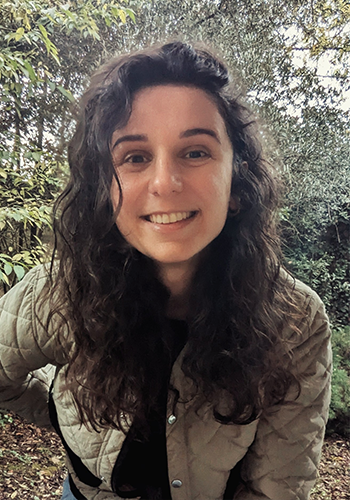
The real question might be: “Why water?” It is this element, specifically, that led me to Science and Technology. From a young age, I told my parents I wanted to pursue a meaningful profession, a job that made a difference, even if I didn’t use that word back then. Water naturally became my focus. Studying water means understanding the world around us, literally, through the reading of landscapes. More broadly, it also touches every aspect of contemporary society.
Your professional experience?
After completing my scientific baccalaureate, I had only one goal: to study at the University of Bordeaux and pursue a degree in Life and Earth Sciences. From my first year, hydrogeology, the science dedicated to groundwater, became an obvious choice and never left me. I then enrolled in a specialized master’s program in hydrogeology at the University of Montpellier. For a long time, I believed that long academic paths weren’t for me, probably due to a lack of role models. Eventually, I decided to pursue a PhD in hydrogeology at the University of Corsica. One of the best decisions I ever made.
Your first experience with technology?
My PhD! Often forgotten, a PhD is essentially a fixed-term contract that allows you to develop both highly specialized skills in your research area and a broad range of transferable skills. For nearly three fascinating years, I studied mediterranean groundwater-dependent hydrosystems as part of a transdisciplinary team. It was a demanding, formative, and deeply structuring experience.
What do you do today, and why?
I am a Local Government Engineer – Hydrogeology Specialist, focusing on the management of groundwater resources. My work involves monitoring or leading studies to improve knowledge of these resources, defining their exploitation potential, and establishing management principles.
I loved research but wanted to be closer to the field and more involved in decision-making. I chose to join the territorial civil service to put my skills at the service of the public good.
Your strengths in this role?
I would say my critical thinking and ease with public speaking. I enjoy questioning approaches and their consequences. I fight for my ideas, trying to present the best arguments and perspectives while understanding that I may not be the final decision-maker.
Past challenges, failures and disappointments?
Defending my thesis alone in front of my computer on March 17, 2020. It could have been St. Patrick’s Day, but it was lockdown. True solitude, in every sense of the word!
Best moments, successes you’re proud of?
There have been so many positive moments, it’s hard to choose. I would say my two PhD awards, granted by the Geological Society of France (SGF) and the City of Bastia. The first recognized the quality of my work and the importance of communication, and the second acknowledged its relevance to the local territory.
For me, research and territorial engagement form an essential, inseparable pair. Receiving these distinctions was a tangible acknowledgment of my efforts to contribute to that ideal.
People who helped, influenced -or made your life difficult?
The list is long, both professionally and personally. Naming only a few would not do justice to all who have contributed, directly or indirectly, to my journey. What matters most is that the list of supporters far outweighs those who created obstacles.
Your hopes and future challenges?
To establish a lasting balance between my professional and personal life.
In many passion-driven careers, it’s easy to get absorbed and operate in overdrive.
What do you do when you don’t work?
I fully live. I travel a lot, love live music, and am always on the lookout for new vegetarian and vegan spots to enjoy with friends. Recently, I’ve started fulfilling a long-standing wish by learning to play the piano.
Your heroes -from History or fiction?
“Pocahontas” was THE cartoon of my childhood. I loved this spirited, passionate, and instinctive heroine, who thought outside the box, stood up for her ideals, valued respect for others, and emphasized a connection with nature. Later, I discovered the tragic true story of Pocahontas, which alone illustrates many societal dysfunctions.
A saying or proverb you like in particular?
“The best is yet to come.”
Failure is often stigmatized. Such moments usually leave a stronger mark than success, as they are uncomfortable to experience. But they are merely disappointments relative to expectations at a given moment. I like to think they bring us closer to what truly suits us.
A book to take with you on a desert island?
Soif, la revue de l’eau. Created by enthusiasts, this periodical puts water at the center of discussions across ecological, social, cultural, and scientific dimensions. Absolutely fascinating!
A message to young female professionals?
Be “virile” as girls, borrowing the words of the French singer Suzane. Embrace your strengths and ambitions in your own way, without sacrificing your identity. Qualities often associated with success are frequently labeled as masculine, but they are not exclusive to any gender. We can fully embody them while remaining true to ourselves.