

Why a career in tech?
To be honest, this path wasn’t a childhood dream. I had a period of uncertainty after high school: a failure in an intensive business prep program (prépa HEC) where I felt a profound academic and social disconnect. I didn’t feel like I belonged in the world of “higher education.” But I found my way during my Earth Sciences degree, when I discovered geosciences. Looking back, I believe this choice is linked to my history: my mother was a metalworker; she showed me that technical jobs have no gender and that raw materials are the foundation of everything. I grew up with that example, and today, I want science to serve society. That’s why geothermal energy is the perfect synthesis: it reconciles resource exploitation with the ambition of providing green energy accessible to all.
Your professional experience?
I have a background as a geological engineer, with a very academic foundation from Pierre and Marie Curie University (a Research Master’s) and a more applied education at IFP School (an Engineering degree in Petroleum Geology). I also spent a year of my Bachelor’s in Canada to specialize in mineral exploration.
Your first experience with technology?
My first professional field experience was a mapping camp in Northern Canada, measuring rock deformation and mapping ore deposits. That three-month experience in the heart of the wilderness, living among bears and mosquitoes, was extraordinary. I met people so different from myself, especially our camp leaders from the Innu Indigenous Nation, who have preserved an incredibly strong bond with nature.
What do you do today, and why?
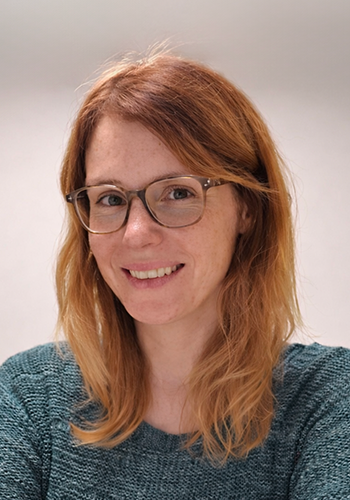
Today, I am a Geosciences Expert at Dalkia. My mission is to provide technical expertise on deep geothermal energy. I spend a lot of time translating regional potential into strategic opportunities, strengthening our bids for public tenders, and educating our teams on the merits of this beautiful energy resource. I do this because I am convinced of our public service mission: geothermal energy makes green energy affordable for everyone. Dalkia is the historical operator that pioneered this energy in France and reinvented production methods with innovative well architectures derived from the oil industry. This technology transfer is a key factor in our projects’ success.
Your strengths in this role?
Technically, my strengths are my knowledge of the subsurface and my strategic vision of geological resources. But what truly sets me apart is my perspective as an “embedded citizen.” I believe my interest in understanding how our society works gives me a unique framework for navigating situations with various stakeholders. It allows me to anticipate friction points, seize opportunities, and maintain a focus on local roots and listening—especially with local authorities, without whom these projects could never see the light of day.
Past challenges, failures and disappointments?
It’s hard to speak of challenges in the past tense. I feel like the challenge of the energy transition overshadows everything else! But if I had to share something more personal: I took my driving test eight times before passing—five times for a car and three times for a motorcycle! With hindsight, I’ve turned these failures into funny anecdotes, but at the time, they reflected the immense pressure I put on myself and didn’t know how to handle. Failing your license when you come from a precarious background creates a vicious circle: the financial drain of driving lessons transforms a simple setback into a real barrier to empowerment and mobility. I’ve been a very careful driver ever since!
Best moments, successes you’re proud of?
Professionally, I am very proud of making the Cachan drilling project (a 1,000m sub-horizontal doublet) a concrete success. It was a world first in geothermal energy, requiring extreme technical focus and pressure to monitor every centimeter of drilling in real-time. I am also very proud of my civic engagement over the past 12 years in the city where I grew up. Finally, on a personal note, I am of course very proud of my life as a mother and my two children, Wilson and France, who have very strong characters.
People who helped, influenced -or made your life difficult?
I was lucky to grow up in a city that embodied “concrete solidarity” for young people who didn’t start with “social capital.” La Courneuve offered me many opportunities I wouldn’t have had access to otherwise: fun ski trips, more introspective humanitarian work in Egypt, and responsibilities in sports clubs to launch new cultural dynamics. I also owe a lot to my mother, who went above and beyond to give me all the material support she could.
Your hopes and future challenges?
I want to have a positive impact on the world. Without pretension, but with the conviction that we can all contribute a small brick to the structure. I want energy to be at the heart of civic discussions and political concerns. For that, we humans—whatever “hat” we are wearing—need to learn to trust each other again. My specific challenge for geothermal energy is to make ethics our best argument for a better management of natural resources, our common good!
What do you do when you don’t work?
In my free time, I’m touched by “popular culture”: French chanson, horse racing, and the TV show Joséphine, Ange Gardien. I also love dance, especially classical ballet. Ballet is an art form that deeply moves me. The beauty of the bodies, the harmony between dancers, the costumes… when I see them, I am convinced that magic exists! To ground myself back in reality, I create mosaics; it’s the geologist in me expressing herself through little stones.
Your heroes -from History or fiction?
Buffy the Vampire Slayer, of course! I grew up with the “Saturday Trilogy” (a French cult TV block). I also would have loved to grow up with Frozen or Rumi from Kpop Demon Hunters. I’m delighted that my daughter has access to these female role models to build her imagination… even if it means having the songs stuck in my head all day!
A saying or proverb you like in particular?
“Fear does not prevent danger!” (La peur n’évite pas le danger). I am a very anxious person, and this phrase helps me keep moving forward even when I am terrified.
A book to take with you on a desert island?
I would take The Empire Trilogy (by Raymond E. Feist and Janny Wurts). Mara of the Acoma is a strong and intelligent female character. She is a heroine who goes through a lot but empowers herself in a deeply patriarchal universe. Her story represents resilience and the ability to overcome difficulties through cunning and diplomacy.
A message to young female professionals?
Technical fields are a powerful way to exercise your citizenship! Take part in the movement of the world; it is essential that the technical future is written in the feminine.