

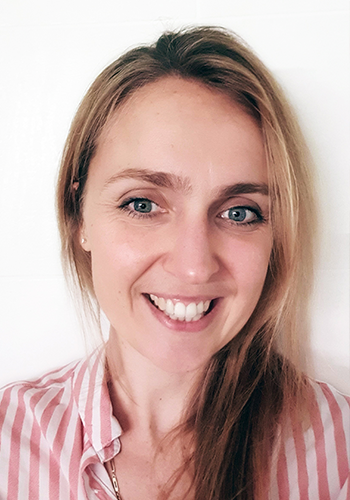
Why a career in tech?
Technology and biology enable the development of tools to better treat and understand diseases.
I hope that my contribution will help patients to some extent.
Your professional experience?
After completing a Master’s degree in Biosciences at ENS de Lyon, I conducted my doctoral research on type 2 diabetes at Claude Bernard University Lyon 1. For my postdoctoral work, I moved to Sweden to join the Malmö Clinical Research Center, where I focused on identifying new therapeutic targets and drug repurposing for diabetes treatment. Subsequently, I joined University Grenoble Alpes, working on a European project aimed at developing a bio-artificial pancreas based on the encapsulation of pancreatic islets. Later, I joined CEA Grenoble as a researcher to work on pancreatic islet organoids, with a focus on personalized medicine for type 1 diabetes.
Your first experience with technology?
My first experience in tech was working on a pancreatic islet encapsulation project—a collaboration involving numerous European partners. That was when I realized that combining technology and biology allows us to go beyond what either field could achieve on its own. Technology serves biological progress, enabling the development of more relevant human models.
What do you do today, and why?
I work as a researcher at CEA Grenoble/BIOMICS, focusing on pancreatic islet organoids towards personalized medicine applications for type 1 diabetes.
This work is carried out in close collaboration with CEA-Leti. Thanks to technologies developed at Leti—particularly in microfluidics—we are taking our biological models to the next level, with a vision of using them towards personalized medicine applications for diabetic patients (such as monitoring pancreatic islet transplants, testing new drugs, understanding disease onset, etc.).
Your strengths in this role?
My knowledge of diabetes pathophysiology, my aptitude for multidisciplinary teamwork and my adaptability.
Past challenges, failures and disappointments?
The organoid or organ-on-a-chip model we developed is relatively complex; it requires coordinating many aspects, including human biological samples, technology, and monitoring. In these tiny technological devices, a mere speck of dust in the work—or rather, an air bubble—can derail the entire experiment. It is a challenge we tackle as a team, alongside all our collaborators in the field.
Best moments, successes you’re proud of?
My thesis defence, which marked the culmination of my studies. I believe that was the moment I truly became a researcher thanks to interactions with peers who sought my opinion on my subject. I loved sharing that moment with my family and friends who have always supported me.
People who helped, influenced -or made your life difficult?
Two pivotal encounters: my undergraduate professor Paul Bland at the University of Gothenburg, for helping me develop a critical mindset through “problem-based learning”—a real turning point for me.
My mentor—and now my sponsor at the Academy—Xavier Gidrol, for sharing his vision and passion with me..
Interactions are essential in this profession; surrounding yourself with the right people and working with those you appreciate is a real privilege.
Your hopes and future challenges?
Taking our organoids-on-a-chip model even further—trying to mimic what happens in patients in order to understand and anticipate biological phenomena. Maybe in the future, both a blood sample and a result of organ or organoid on-chip will be prescribed to the patients, to help clinicians in their diagnostic, theragnostic and prognosis.
What do you do when you don’t work?
I spend a lot of time “at work” because it is truly a job driven by passion!
I enjoy time with my loved ones and practice mountain sports (hiking, trail and skiing).
Your heroes -from History or fiction?
History: Marie Curie, for her discoveries.
Fiction: June Osborne, Margaret Atwood’s protagonist, for her determination.
A saying or proverb you like in particular?
Be prepared for the unexpected.
A book to take with you on a desert island?
A botany book to learn about edible wild plants.
A message to young female professionals?
Trust yourself, follow your instincts!